Does SEO work for auto detailing businesses? See real 90-day data: 216% more impressions, rankings climbing from page 2 to page 1. Read the breakdown.


April 22, 2026
5 Minutes
April 22, 2026
If you run a detailing business, you already know the work. You know the difference between a two-stage correction and a quick polish. You can spot swirl marks under halogen lights from ten feet away. You've flushed enough iron fallout to fill a pool.
What you probably didn't sign up for is figuring out why the shop two towns over ranks above you on Google. Or why your Instagram reels pull views but no bookings. Or why Yelp keeps asking you to spend $400 a month for leads that ghost.
We've worked inside this industry long enough to know the pattern. Great detailers lose to mediocre ones every day because the mediocre ones figured out marketing first. This guide fixes that.
The detailing industry is stacked with skilled operators who learned paint correction from Kevin Brown, got IDA certified, and invested in real ceramic coating training. Then they put up a Wix site, claimed a Google profile, posted a few before-and-afters, and waited.
Nothing happened. Or worse, a guy running a pressure washer out of his trunk started showing up above them for "ceramic coating near me."
Here's the gap. Google doesn't rank you based on skill. It ranks you based on signals it can measure: on-page content, reviews, backlinks, citation consistency, site speed, proximity to the searcher, and about 200 other factors. Most detailers don't know these signals exist, so they optimize for the wrong things.
A recent BrightLocal study found that 98% of consumers used the internet to find information about local businesses in the past year, and 87% used Google specifically. If you're not ranking, you're not in the conversation. You don't get a shot at the pitch.
The good news: your competitors usually aren't doing much either. The bar to win local detailing search is lower than you think.
If you do one thing after reading this post, fix your Google Business Profile. It's the single highest-ROI asset in auto detailing marketing, and most detailers leave it half-built.
Start with the basics. Your primary category should be "Car detailing service," not "Car wash." Add every relevant secondary category: auto restoration, window tinting service, car accessories store if you sell coatings. Each one opens you up to more search queries.
Then fill everything. Every service, with descriptions. Every photo slot, with real shots of your work and your setup. Hours, service area, attributes, the works. Detailers who keep their GBP fully populated get significantly more profile views than those who don't.
Post weekly. Google rewards active profiles, and the posts show up in your knowledge panel when someone searches your name. Share a ceramic coating install, a before-and-after from a paint correction, a shout-out to a repeat client. Takes ten minutes.
The profile is also where your reviews live, which matters more than almost anything else you'll do. We'll cover that in a minute.
Your Google Business Profile gets you found. Your website closes the deal. When someone clicks through from Google or Instagram, you have roughly five seconds to convince them you're worth a call.
Most detailer sites fail this test. They lead with a hero image of a random Lamborghini the detailer never touched. The navigation is confusing. The phone number isn't clickable on mobile. There's no clear pricing or service explanation. The "About" page talks about passion for cars instead of what makes this shop different.
Fix the fundamentals first. One clear H1 that names what you do and where. A clickable phone number at the top. Real photos of your work, with your branding visible. Service pages for each offering: ceramic coating, paint correction, mobile detailing, interior detail. Each page should target its own keyword and answer the questions that service's buyers actually ask.
Fast loading matters too. If your site takes four seconds to load on a phone, you're losing half your traffic before they see the first image. Compress everything. Get off shared hosting if you're on it.
If you want this handled for you, that's exactly what our SEO services for detailers are built to do.
Detailers ask us this constantly: should I run Google Ads or focus on SEO? The honest answer is both, but not equally, and not in that order.
Paid ads give you instant traffic. You turn them on, leads come in, you turn them off, leads stop. That's the deal. For a new shop with zero rankings, paid is a reasonable bridge to keep the schedule full while you build the long game.
The problem is cost. In most metros, "ceramic coating" clicks run $8 to $20. If your conversion rate is 5% and your average ticket is $1,200, the math works. If either number sags, you're feeding Google without a return. And the second you stop paying, it all disappears.
SEO is the opposite shape. It's slow to start, but every ranking you earn keeps producing. A page that ranks #1 for "paint correction [your city]" can send you qualified leads for years. You're not renting attention, you're owning it.
For most detailers, the smart play is a small, disciplined ad budget to cover new shops or slow months, with the bulk of effort going into SEO and Google Business Profile. That's the approach that compounds.
Reviews are the oxygen of local search. Google uses review count, recency, and rating as direct ranking signals. Customers use them as the final gut check before they book. Detailers who get review generation right pull ahead of shops that are objectively better at the actual work.
The problem is that most detailers ask for reviews wrong. They hand a card at pickup. They send a vague "we'd appreciate a review" text two days later. Response rates stay under 5%.
Here's what works. Send the review request within an hour of finishing the job, while the client is still standing next to their reflection in the hood. Text, not email. Include a direct link to your Google review page, not your homepage. Use their first name. Keep it short:
"Hey Mike, thanks for trusting us with the M3 today. If you're happy with how she turned out, a quick Google review would mean a lot to us. [link]"
That template pulls 25% to 40% response rates consistently. Do it for every job. Within six months you'll pass every competitor in your city on review count.
Respond to every review too. Positive, negative, all of them. Google notices, and so do future customers reading through.
Social media confuses detailers because the feedback loop is broken. You post a killer ceramic coating reel, it gets 80,000 views, and you book zero jobs from it. Meanwhile a boring photo of a minivan interior detail pulls three inquiries.
Here's what's actually happening. Instagram and TikTok are top-of-funnel tools. They build awareness, prove your skill, and warm up a local audience over months. They don't produce same-day bookings the way Google does. Judging them by direct conversions is how detailers end up quitting right before it would've worked.
Use social to document the work. Before-and-after reels of paint correction. Short clips of water beading on a fresh coating. A walk-through of your mobile setup. Post consistently, not constantly. Three real posts a week beats ten rushed ones.
Geotag every post. Use local hashtags that actually get used in your market, not generic ones like #detailing that bury you next to shops in Dubai. Engage with local car accounts, dealerships, and enthusiast groups. That's how you compound locally.
Don't try to go viral. Try to become the detailer every serious car person in your city already follows. That's a much more winnable game.
Here's the part detailers don't fully see until they're two years in. SEO doesn't pay linearly. It pays exponentially, and then it pays forever.
Year one feels slow. You're publishing content, fixing technical issues, earning reviews, building citations. Rankings creep up for long-tail terms first, then mid-competition ones. The trickle of leads turns into a steady pull.
Year two is when the compounding shows up. The pages you wrote last year are now ranking. The reviews you earned are pulling conversions. The backlinks you built are lifting the whole domain. You add new pages, and they rank faster because your site already has authority.
By year three, competitors can't catch you without spending years doing the same work. Your cost per lead drops every month while theirs stays flat. The shop down the street that outspent you on ads is still outspending you, and you're still outranking them.
This is why SEO is the strongest marketing asset a detailing business can own. It's not a campaign. It's an appreciating asset that makes every future marketing dollar work harder.
We only work with auto detailing businesses. Every site we audit, every page we optimize, every strategy we build is shaped by what actually moves the needle in this industry. Not generic SMB playbooks. Not recycled advice from marketing blogs written by people who've never held a DA polisher.
If you're tired of watching competitors outrank you with worse work, we'll show you exactly what's holding your site back. Grab a free SEO audit and we'll walk you through the gaps on your site, your Google Business Profile, and your competitor landscape. No pitch deck, no pressure. Just a clear picture of what's costing you bookings and what to fix first.
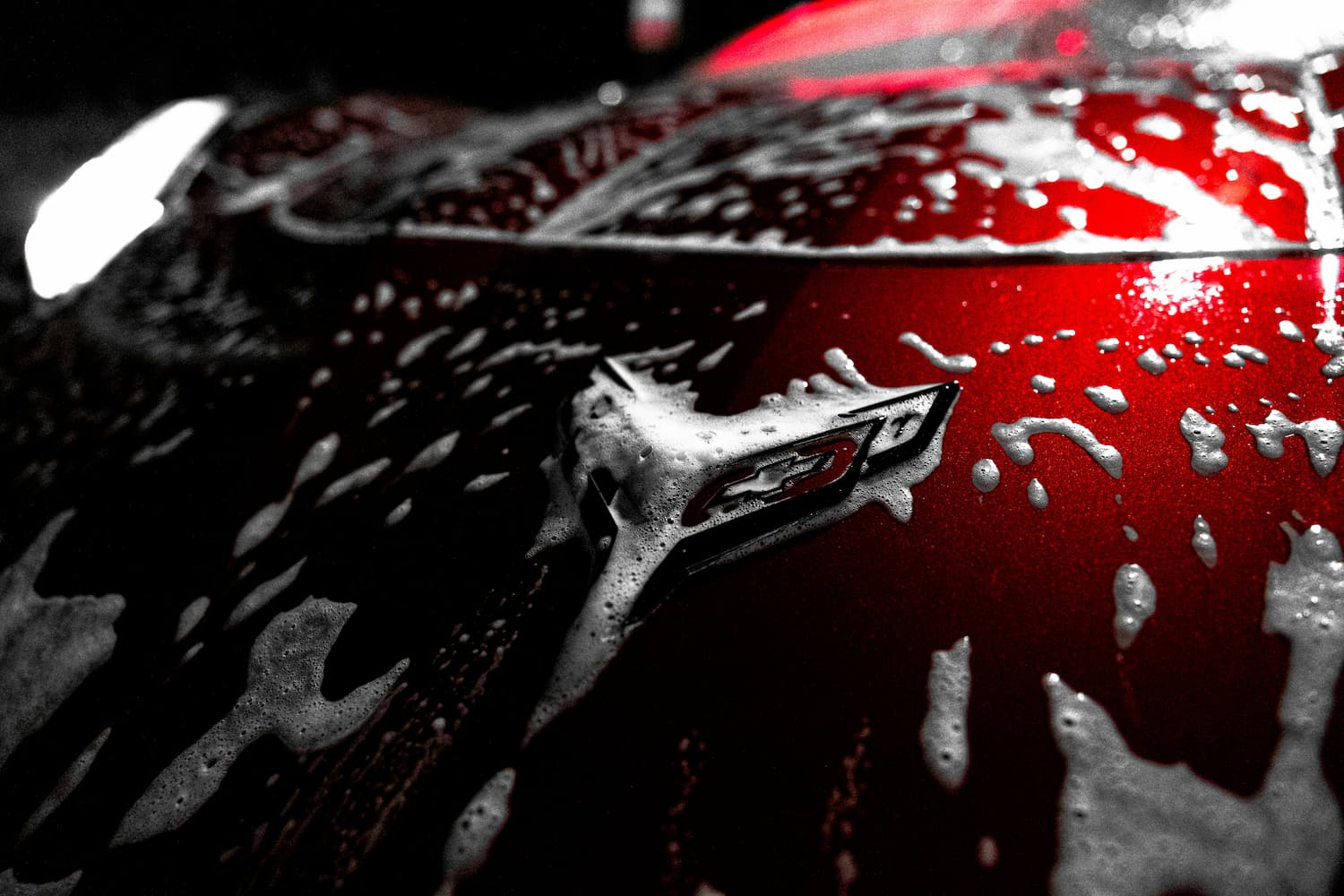
Photo by Brian Lundquist on Unsplash



Does SEO work for auto detailing businesses? See real 90-day data: 216% more impressions, rankings climbing from page 2 to page 1. Read the breakdown.

The curated SEO keyword list for car detailing, organized by intent, plus a prioritization framework and real Google Search Console data showing which keywords actually rank and convert.
Ready to grow your business?
Currently focused exclusively on the auto detailing industry: mobile detailers, ceramic coating specialists, and full service shops